
If you’re planning a Disney holiday, you’ve probably come across the term Lightning Lane. At first glance, it can sound a little confusing, but the idea is actually quite simple.
Lightning Lane is Disney’s paid service that lets you skip much of the regular queue on many of the most popular attractions, helping you experience more rides during your day. Think of it as a way of spending less time waiting in line and more time enjoying the parks.
The interesting part is that while both Disneyland Resort in California and Walt Disney World in Florida offer Lightning Lane, they work quite differently.
Having recently used both systems, I came away with one clear favourite. While both have their strengths, I found Disneyland’s approach to be much more relaxed, flexible and enjoyable, making it something I happily purchased every day of my visit.
Let’s take a look at why.
What is Lightning Lane?
Most guests will use Lightning Lane Multi Pass.
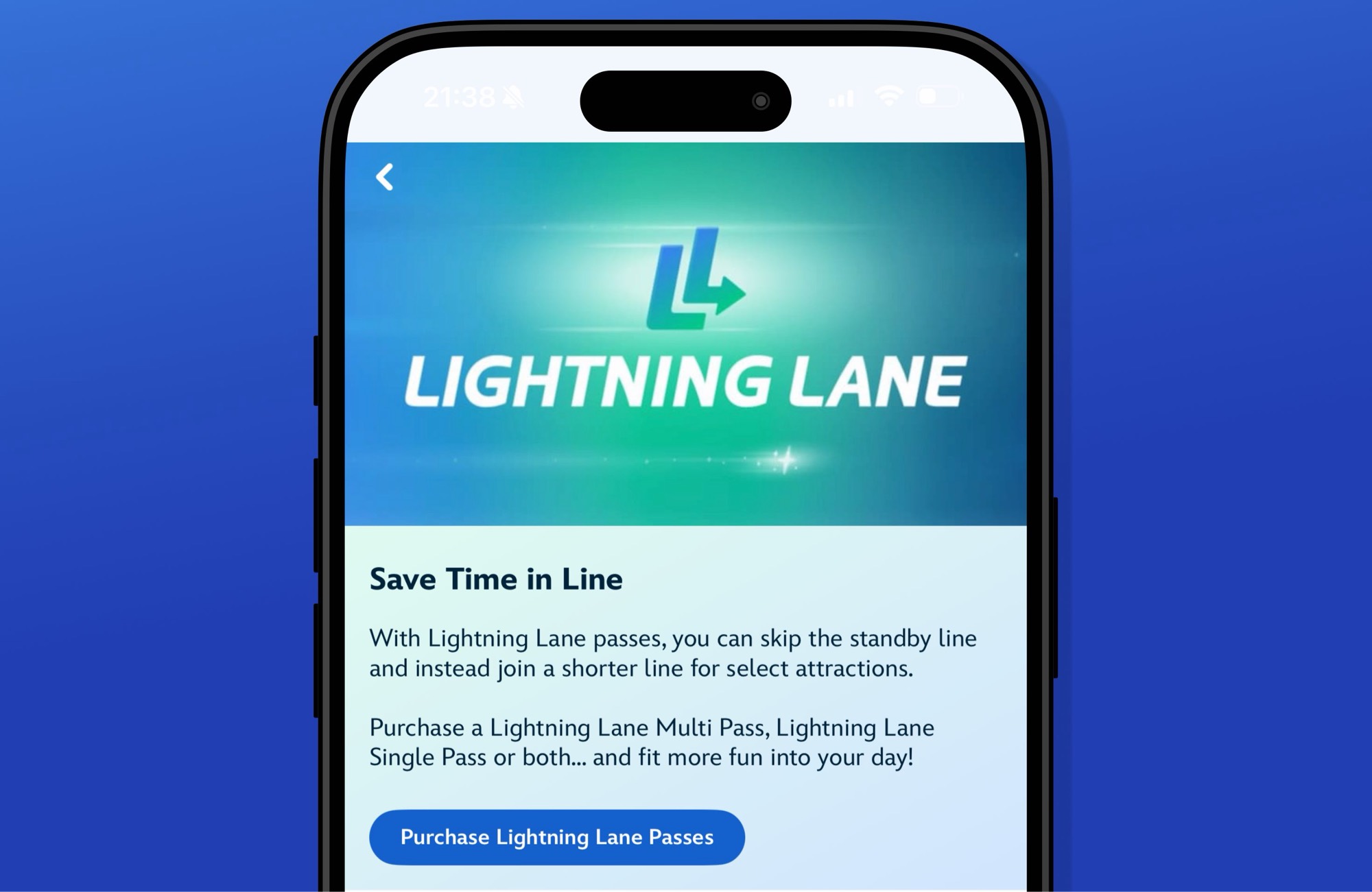
After purchasing it, you can reserve a return time for selected attractions using the Disney app. Instead of joining the main standby queue, you’ll enter through the Lightning Lane entrance during your booked time, often reducing your wait significantly.
Some of Disney’s biggest attractions aren’t included in Multi Pass and instead use Lightning Lane Single Pass, where you pay individually for access to that particular ride.
Although the names are the same at both resorts, that’s where many of the similarities end.
Lightning Lane at Disneyland Resort
One of the things I loved most about Disneyland’s system was how little planning it required.
Once you’ve entered either Disneyland Park or Disney California Adventure, you simply open the Disneyland app and choose whichever available attraction you’d like to ride next. After you’ve used that reservation—or after a short waiting period—you can make another.
It’s incredibly straightforward.
Even better, if you have a Park Hopper ticket, both parks are treated as one resort. You’re free to reserve attractions in either park throughout the day, hopping between them in just a few minutes.
That flexibility completely changes how your day feels.
Rather than following a rigid schedule, you can simply wander through the parks, see what takes your fancy and book attractions as you go. If you’ve just stepped off Pirates of the Caribbean and notice Indiana Jones Adventure has a convenient return time, you can book that next. Or perhaps you’re spending the morning in Disneyland Park before hopping across to Disney California Adventure for Guardians of the Galaxy – Mission: BREAKOUT! later in the afternoon. The system feels incredibly flexible, allowing you to build your day around what you want to do in the moment, rather than sticking to a plan you made days in advance.
Lightning Lane at Walt Disney World
Walt Disney World’s system works a little differently.
Here, you’re encouraged to think about your plans before your park day begins. Guests can purchase Lightning Lane Multi Pass ahead of their visit and select return times for attractions in advance.
Once you’ve used your first reservation, you can continue making additional selections throughout the day.
The advantage of this approach is that you can secure access to some of your favourite attractions before your holiday even begins, giving a little extra peace of mind—particularly if you’re visiting during busy periods.
The trade-off, however, is that it naturally makes your day feel a little more planned.
For some families, that’s exactly what they want.
Personally, I found myself preferring the more spontaneous approach that Disneyland offers.
Why are they different?
It’s easy to wonder why Disney doesn’t simply use the same system everywhere.
The answer probably comes down to the size of each resort.
Disneyland Resort is wonderfully compact. Its two parks sit directly opposite one another, meaning it’s easy for guests to move around during the day. If one attraction has a longer wait than expected, it’s no trouble to head somewhere else.
Walt Disney World is on a completely different scale.
With four theme parks spread across an enormous property, travelling between them can take quite some time. Many guests spend an entire day in just one park, so Disney needs a system that helps manage demand across thousands more visitors and many more headline attractions.
Neither approach is right or wrong—they’re simply designed for two very different resorts.
What about the biggest rides?
Both resorts reserve a handful of their most popular attractions for Lightning Lane Single Pass, meaning they’re purchased separately from Multi Pass.
At Disneyland Resort, just two attractions require a Lightning Lane Single Pass (at the time of writing): Radiator Springs Racers and Star Wars: Rise of the Resistance. That means Multi Pass covers the vast majority of the resort’s most popular attractions, making it feel like excellent value.
At Walt Disney World, more of the resort’s headline attractions sit outside the Multi Pass offering.
For me, this is where the value proposition starts to feel a little different.
At Disneyland, buying Multi Pass genuinely felt like it transformed my day. I could use it repeatedly across a fantastic selection of attractions and rarely felt like I was missing out.
At Walt Disney World, I occasionally found myself looking at the attractions I most wanted to ride and realising they would require another purchase.
It’s not necessarily a criticism—those attractions are incredibly popular—but it did make me think a little harder about whether I needed Lightning Lane every single day of my holiday.
Which offers better value?
This is where I think the two resorts differ the most.
At Disneyland Resort, I never really questioned whether Multi Pass was worth buying. With access across both parks and such a wide range of included attractions, it genuinely enhanced every day of my visit.
At Walt Disney World, however, the value can vary considerably depending on which park you’re visiting.
For example, Magic Kingdom offers a huge selection of Lightning Lane attractions, making Multi Pass an excellent way to maximise your day. By comparison, Disney’s Animal Kingdom has fewer eligible attractions, meaning the benefit isn’t quite as significant. That’s not to say it isn’t worthwhile—particularly during busy periods—but I found myself being much more selective about when I chose to purchase it.
If you’re someone who enjoys having everything organised before you travel, Walt Disney World’s system may suit you perfectly. Knowing you’ve already secured times for some of your favourite attractions can remove a lot of uncertainty from the day.
If, however, you’re like me and prefer to wake up, grab a coffee and simply decide where the day takes you, Disneyland’s system feels wonderfully liberating.
I loved being able to change plans on the fly without worrying whether I’d booked the “right” attraction days earlier.
It felt much closer to the carefree Disney holiday I’d imagined.
Final thoughts
There’s no denying that both Lightning Lane systems help guests make the most of their day, and for many visitors they’ll be well worth considering.
But if I had to choose one?
Disneyland Resort.
Its Lightning Lane experience feels simple, intuitive and incredibly guest-friendly. The ability to move freely between both parks, book attractions as you go and enjoy an impressive range of included rides meant I found myself using it every single day—and never once questioned whether it was worth it.
At Walt Disney World, I still appreciated the convenience it offered, particularly on busy days, but I was much more selective about when I felt it added value, depending on which park I was visiting.
Ultimately, both systems achieve the same goal: helping guests spend more time enjoying attractions and less time waiting in line. They simply go about it in different ways.
For me, Disneyland’s approach strikes the perfect balance. It’s simple, flexible and quietly enhances your day without ever becoming the focus of it—and that’s exactly how a little Disney magic should feel.

Leave a Reply