

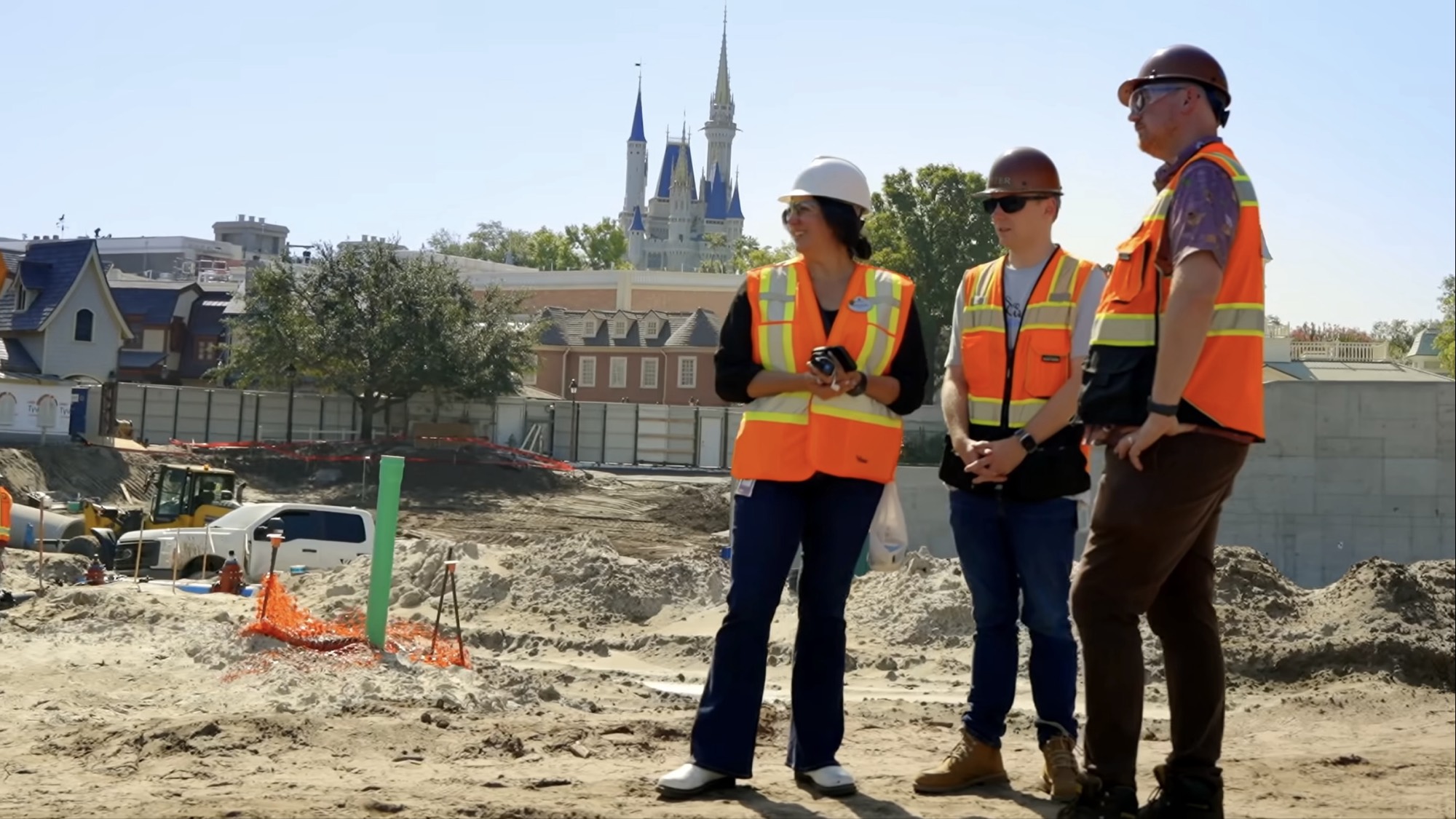
There is always a slightly strange period after D23. For one weekend, every announcement feels enormous, concept art fills giant screens and Imagineers talk enthusiastically about attractions and lands that may still be years away. Within minutes, social media and Disney fan sites are full of headlines declaring that the future of the parks has arrived. A few weeks later, once the excitement has settled and the announcements have been picked apart from every possible angle, the more useful question becomes less about what Disney announced and more about what is actually progressing.
That distinction feels particularly important after D23 2026 because many of the projects discussed this year were not really new at all. Villains Land, Tropical Americas, Monstropolis, the Coco attraction and the Avengers Campus expansion all trace their origins back to earlier announcements, particularly D23 2024. What Disney has increasingly been doing in 2026 is returning to those promises with more detail, more construction progress and, importantly, more evidence that these projects are actually going to happen. For a company that spent several years talking in increasingly vague “blue sky” terms about what it could build, that is a meaningful change. Disney has spent the period since D23 2024 turning artwork into construction sites, models into ride systems and broad ideas into much more specific places.
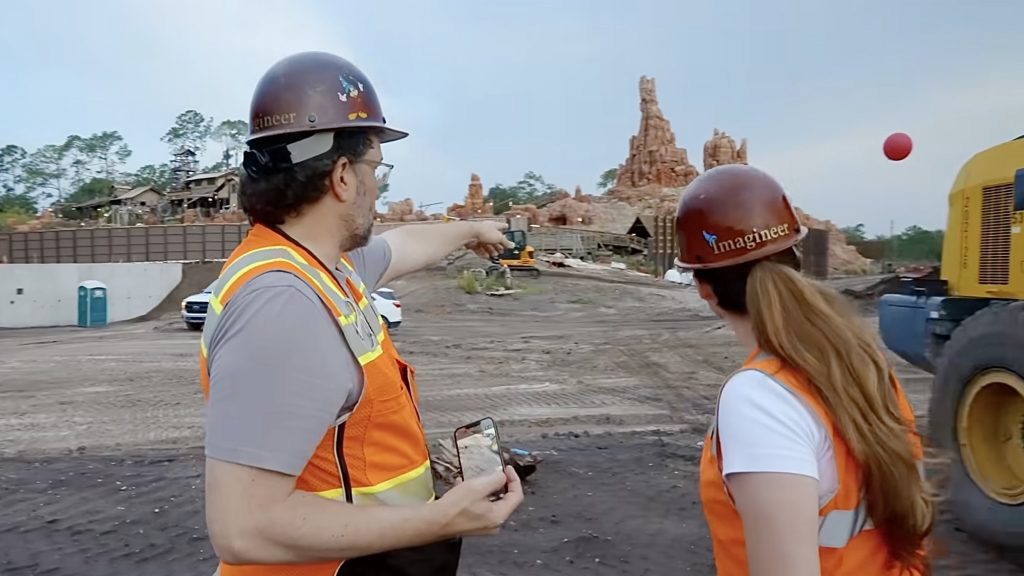
The recent We Call It Imagineering episodes have been especially useful in showing that transition, giving us a look at everything from Monstropolis façade work to finish samples for Tropical Americas and balloon testing at Piston Peak.
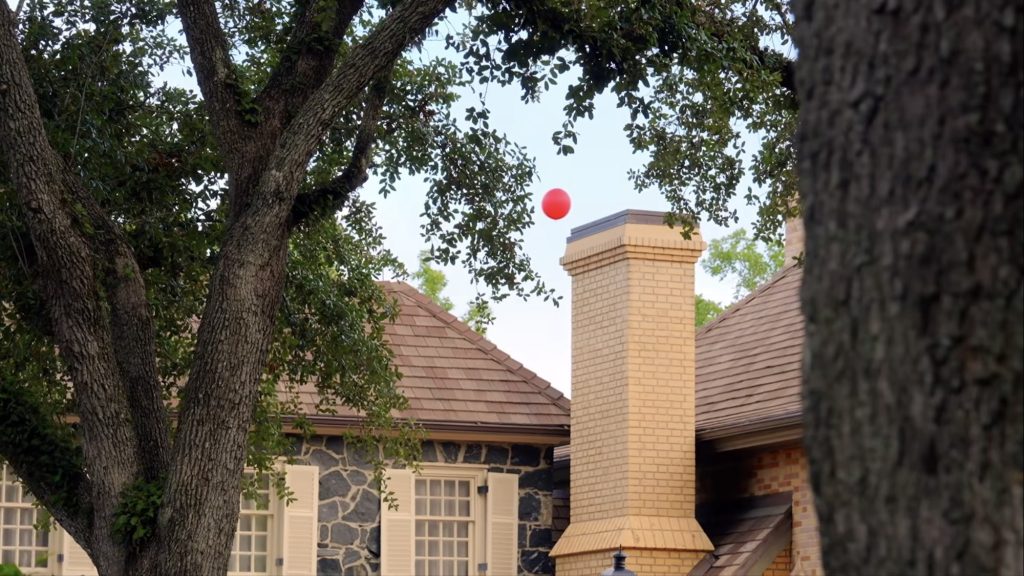
While I love concept art, this is far more interesting to me, because Disney’s biggest challenge over the past few years has not really been coming up with ideas. It has been convincing us that those ideas are genuinely going to be built.
Disney finally seems to have moved beyond the blue-sky era
For quite a while, Disney Parks presentations became frustratingly vague. Entire lands were discussed as possibilities, pieces of artwork appeared without timelines and major developments were floated publicly before disappearing almost as quickly as they had arrived. The phrase “blue sky” became shorthand for an idea Disney wanted fans to get excited about without necessarily committing to when, where or even whether it would ever happen.
D23 2024 was supposed to mark a change in that approach, with Disney making a point of saying that the projects being presented were not merely speculative ideas but real developments moving towards construction. Two years later, it is becoming much easier to see the difference. Tropical Americas is visibly taking shape at Animal Kingdom, Avengers Campus is physically expanding, the Coco attraction has moved into construction, work is progressing on The Lion King area at Disneyland Paris and Monstropolis now has enough visible structure for Imagineering to start showing us parts of the city itself.
There are still projects that remain much further away. Villains Land is clearly a long-term development, the reimagining of Disneyland’s Tomorrowland is still at an extremely early stage and the Avatar expansion at Disney California Adventure remains less defined than some of the projects around it. Even so, the overall picture now feels considerably more concrete than it did a few years ago.
Disney is not merely talking about building again; in a number of places, it’s actually building it.
Monstropolis is becoming much more than a Monsters, Inc. coaster
I was already interested in the Monsters, Inc. development at Disney’s Hollywood Studios, but D23 2026 made the project feel much more like a genuine place rather than a headline coaster surrounded by IP decor. Disney has now given the land an identity of its own as Monstropolis: The City Frightful, and some parts of the area are expected to open to guests in 2027 while construction continues on the door-vault coaster.
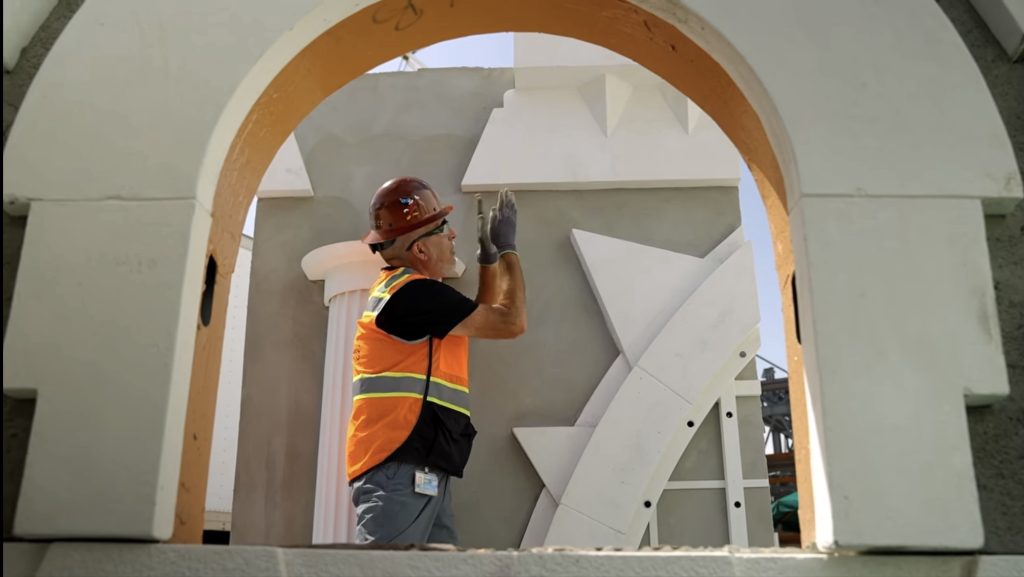
What I find particularly encouraging is the amount of attention being given to the city around the attractions. Disney has discussed different districts, shops, restaurants and entertainment, including Harryhausen’s and a new theatre production, while the Imagineering material shown since D23 has given us glimpses of the architectural elements now under construction. The impression is increasingly that Imagineering is trying to build a functioning monster city rather than simply a collection of references from the film.
That could be particularly important for Hollywood Studios, because the park has increasingly become a collection of really good individual destinations without much connective tissue between them. You can move from old Hollywood to Toy Story Land, into Galaxy’s Edge and then into another themed environment with very little sense that these places belong to the same park. Monstropolis will undoubtedly make that problem worse, but if Imagineering succeeds in making the city feel dense, believable and lived in, it may become one of the more convincing modern additions to the park.
The best Disney lands do not feel as though they were built simply to contain attractions. They feel as though they existed before you arrived and will continue to exist after you leave. Animal Kingdom being a perfect example of this, and Monstropolis is beginning to look as though that is the standard Imagineering is aiming for.
Piston Peak could be the evolution Frontierland actually needs
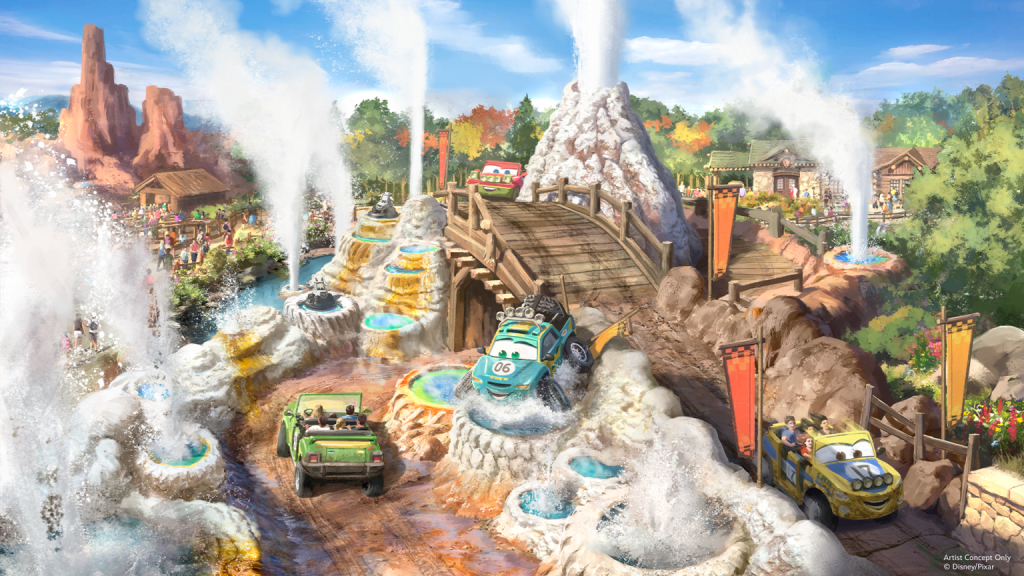
Of all Disney’s current projects, Piston Peak National Park may be one of the most interesting because it raises a bigger question than whether Cars belongs in Magic Kingdom. It asks what Frontierland is supposed to be in a modern Disney park.
When Disneyland opened in 1955, westerns were hugely popular. Cowboys, frontier towns and the mythology of the American West were part of mainstream entertainment in a way they simply are not today. Frontierland made immediate cultural sense. Nearly seventy years later, I am not sure the traditional western theme has quite the same pull, particularly when compared with areas such as Fantasyland or Adventureland, which have much broader themes and considerably more room to evolve.
That is perhaps Frontierland’s biggest problem. Once you have created the western town, the river, the frontier landscape and the associated attractions, where do you really go next without simply repeating the same visual language? Adventureland can stretch from tropical jungles to temples, pirates and exploration. Fantasyland can accommodate almost any fairytale or fantastical setting Disney wants to introduce. Frontierland is much narrower, and that inevitably makes meaningful expansion more difficult.
That is why I find Piston Peak more convincing than some of the criticism around it might suggest. Disney California Adventure’s Cars Land was itself a major turning point for that park. It introduced a fully realised land based around a single Disney property at a time when DCA still struggled, in places, to feel particularly Disney. Radiator Springs gave the park something immersive, recognisable and distinctly associated with the Disney and Pixar catalogue, and I think it played a significant role in making DCA feel more complete.
Piston Peak appears to be taking a different approach rather than simply repeating Cars Land in Florida. Imagineering is using the broader world of Cars as a way into the landscapes and architecture of America’s national parks, with mountains, wilderness, geysers and ranger-style buildings intended to blend naturally into the existing Frontierland. In that sense, it could actually broaden the definition of Frontierland rather than abandon it altogether. The American frontier was not only about dusty western towns; it was also about exploration, wilderness and the expansion into vast natural landscapes.
There is, of course, a legitimate loss in replacing the Rivers of America and Tom Sawyer Island. The river brought kinetic energy to what is otherwise quite a narrow part of Magic Kingdom, with the Liberty Belle moving through the landscape and the water creating a sense of depth and openness between the pathways. That atmosphere had value, even if it was not always something guests consciously appreciated.
At the same time, it is difficult to ignore how underutilised much of that space had become. Tom Sawyer Island occupied a significant area of one of the world’s busiest theme parks without attracting anything close to the number of guests that newer attractions and lands can accommodate. The Rivers of America looked impressive, but large parts of the surrounding area functioned more as scenery than as somewhere most guests actually chose to spend much time.
The recent balloon testing shown through We Call It Imagineering also suggests that Disney understands what it risks losing by filling that space. Imagineering is testing sightlines, scale and the placement of the new mountainous landscape so that Piston Peak still provides depth and movement rather than simply becoming another wall of buildings. If the finished land retains that sense of openness while making considerably better use of the space, then this could be less about destroying Frontierland and more about allowing it to evolve.
For me, that is what makes Piston Peak particularly interesting. I do not think Frontierland needs to remain frozen in a 1950s interpretation of the American West simply because that was what Walt Disney originally built. If Disney can preserve the land’s sense of wilderness and exploration while introducing something that speaks more directly to modern audiences, Piston Peak could end up being one of the more logical changes Magic Kingdom has made in years.
Villains Land finally has a story rather than just a collection of characters
Villains Land was probably the easiest D23 2024 announcement to get excited about. A completely new land built around Disney Villains at Magic Kingdom almost sells itself, but the original announcement also left a fairly obvious question unanswered: why would all of these characters be in the same place?
Without some sort of unifying story, Villains Land risked becoming little more than a collection of popular antagonists gathered together because guests recognise them. D23 2026 finally gave the project something much more important by introducing the mythology of a corrupted wishing well and the dark forest that grew around it. The idea is that someone once made a wish so terrible that it poisoned the well and allowed dark magic to spread throughout the surrounding land.
It is wonderfully theatrical, but more importantly it gives Villains Land a reason to exist as a place. The villains are not simply being placed next to one another; they inhabit a world with its own history, rules and atmosphere. The planned major coaster through Maleficent’s enchanted briars and the second attraction involving the Magic Mirror suddenly feel like parts of the same environment rather than two rides united only by the fact that their characters happen to be evil.
This is where I think modern Imagineering becomes much more interesting. There is nothing inherently wrong with building attractions around existing films — Disney has been doing that since the earliest days of Disneyland. The difference is whether the film is simply recreated or whether familiar characters become the starting point for something new.
Villains Land is beginning to sound much more like the latter, and that makes it significantly more interesting than the idea of simply putting Cruella on one side of the path and Ursula on the other.
Tropical Americas feels like a natural evolution for Animal Kingdom
I have never actually visited DinoLand U.S.A., so I do not have the same nostalgia for it that some Animal Kingdom fans do. More than that, I am not particularly fussed that it is gone. There was always something about DinoLand that felt very specific to the era in which Animal Kingdom was created. Dinosaurs were a huge part of popular culture in the 1990s, and the land made perfect sense in that context, but I am not convinced they have quite the same cultural pull today.
What Disney does have now is a much broader range of films exploring cultures and settings beyond the traditional idea of European princesses and castles. Encanto, Coco and Moana have all shown how successfully Disney can build stories around Latin American, Polynesian and other cultural influences, and that makes the idea of a land inspired by the Tropical Americas feel particularly relevant. It gives Animal Kingdom the opportunity to expand its cultural vocabulary rather than simply replacing one film with another.
That is why Pueblo Esperanza interests me so much. The new 11-acre land is not being designed as a straightforward Encanto area with an Indiana Jones attraction added beside it, but as a believable community with its own architecture, history and visual identity. The material Disney has shown through We Call It Imagineering only reinforces that, with Imagineers testing textures, finishes and materials so that the buildings feel aged, lived-in and authentic rather than newly constructed theme park façades.
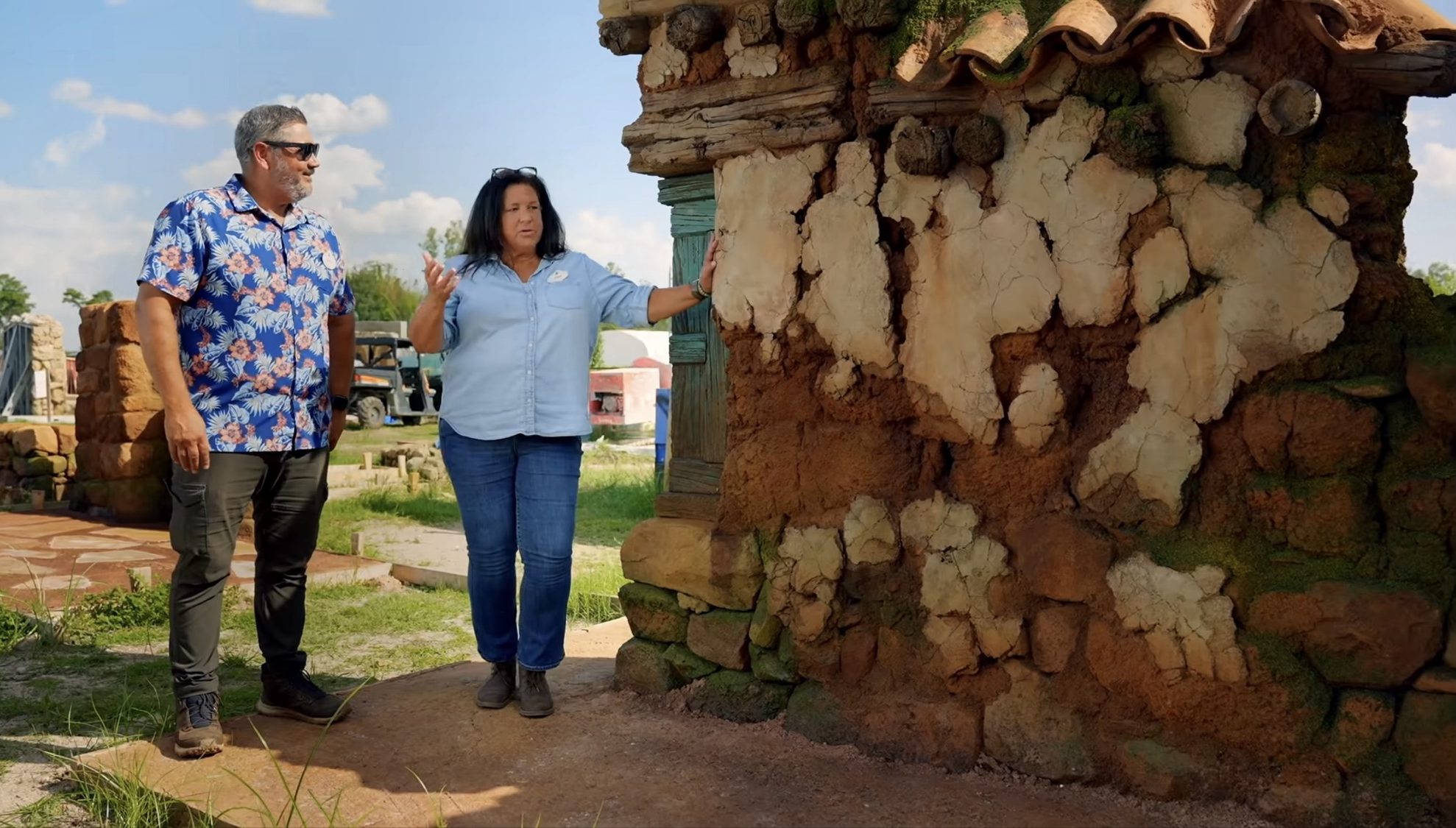
And Animal Kingdom is exactly the sort of park where that level of detail matters. It is one of those Disney parks that genuinely makes you stop and go “wow”, because so much of the theming feels completely immersive and believable. Harambe, Asia, Pandora and even the landscaping between major areas have a sense of place that goes far beyond simply decorating a ride entrance. Having seen Tropical Americas beginning to come together, I have very little doubt that Imagineering will make it fit into that environment convincingly.
The attraction changes also feel like a major win to me. Dinosaur used the same Enhanced Motion Vehicle ride system as Indiana Jones Adventure at Disneyland, and having ridden the latter, I still consider it one of the greatest attractions Disney has ever built. More than thirty years after opening, Indiana Jones Adventure remains thrilling, atmospheric and brilliantly paced, which makes the idea of Animal Kingdom receiving a new Indiana Jones attraction using that same underlying system extremely exciting.
Crucially, Disney is not simply cloning the Disneyland attraction. The Animal Kingdom version will have its own story based around an ancient Maya temple, giving Imagineering the opportunity to retain the strengths of that ride system while creating something specifically designed for this park and this land. From my point of view, replacing Dinosaur with a fresh Indiana Jones adventure is not a downgrade; it is an upgrade.
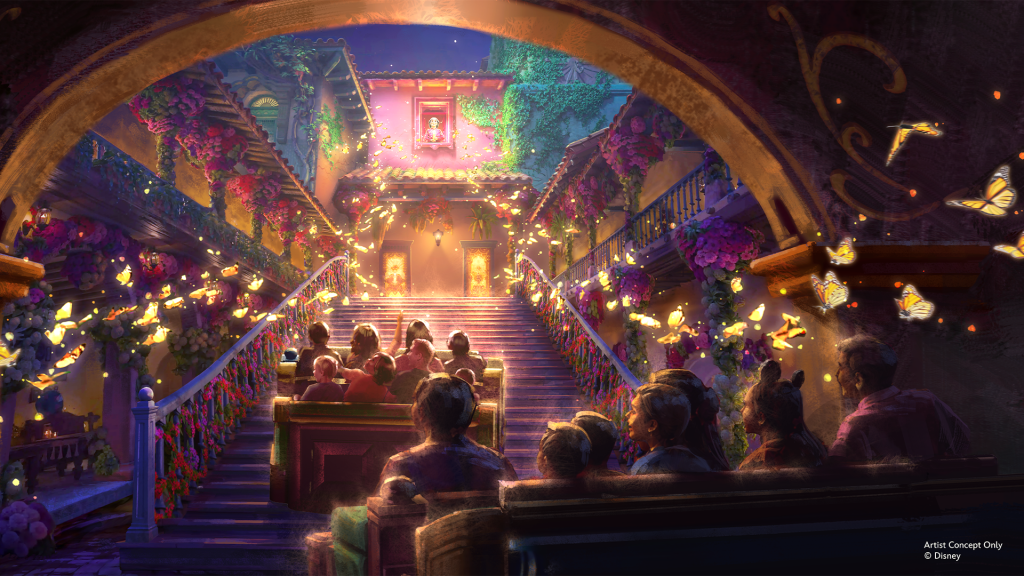
The Encanto attraction also sounds much more substantial than I first expected, with guests travelling inside Casita in ride vehicles inspired by furniture animated by the house itself. The scale of Antonio’s room, with dozens of animal representations planned, suggests that Disney is putting real effort into making the attraction feel like part of Animal Kingdom rather than simply importing a popular film into the park.
For me, the more Tropical Americas takes shape, the more obvious the logic becomes. DinoLand U.S.A. belonged to the Animal Kingdom of the late 1990s. Tropical Americas feels like something designed for the Animal Kingdom of the 2020s and beyond, while still respecting what the park does best: creating environments that feel immersive, culturally rich and completely believable.
And if Imagineering delivers the land to the standard it has set elsewhere in Animal Kingdom, I think it could end up feeling as though it was always meant to be there.
Disneyland’s Tomorrowland could be the most important project of them all
The announcement I found most interesting at D23 was not a ride or even a new land. It was Disneyland’s Tomorrowland.
There were murmurs in the Disney fan community that something was on the horizon for Tomorrowland, but Disney has finally confirmed that Tomorrowland will be comprehensively reimagined, with new attractions, more open space and a stated intention to restore the optimism, innovation and sense of possibility that originally defined Walt Disney’s vision for the area. We still know remarkably little about what will actually be built, but that almost makes the announcement more interesting.
Tomorrowland has been Disneyland’s unresolved problem for years. I actually really like Disneyland’s version of the area, and think there’s something retro chick about it, but visually the land has never entirely recovered from the different redesigns that have been layered over one another. Elements from several eras now compete with each other, while a land that is supposed to represent the future increasingly feels like a record of what previous generations imagined the future might look like – but actually, that might be Tommorowland’s key to a successful revamp.
Tomorrowland also has a problem that almost no other Disney land faces. Fantasyland can always be fantasy, Adventureland can stretch across wildly different kinds of exploration, Toontown can reinvent itself around Disney characters and Galaxy’s Edge has an entire fictional universe to draw from.
Tomorrowland, by definition, cannot remain still. It has to keep asking what comes next.
That is why I found Disney’s language around the project encouraging. The announcement did not begin by telling us which film franchise was moving in. Instead, it talked about optimism, innovation and possibility. Those are ideas rather than intellectual properties, and they are exactly the ideas Tomorrowland needs.
I am under no illusion that the completed land will suddenly be free of familiar characters or franchises, nor do I necessarily think it should be. What I would like to see is Disney using those properties in service of a bigger idea, rather than allowing them to become the entire idea themselves. If Imagineering genuinely uses this opportunity to ask what a hopeful vision of the future should look like in the 2030s, Disneyland could end up with something very special.
There is another reason the Tomorrowland announcement is so intriguing: Disneyland still has the physical remnants of attractions that have not operated for decades, and both of them are deeply connected to Disney’s history. The PeopleMover track still winds its way around Tomorrowland, while the former Carousel of Progress theatre remains part of the land even though the attraction itself left California in the 1970s. For years, those structures have acted almost like ghosts of an earlier Tomorrowland, reminders of ideas that once defined the land but have long since disappeared from the guest experience.
The timing also makes the Carousel of Progress particularly interesting. Over at Magic Kingdom, Disney is currently giving Walt Disney’s Carousel of Progress its most significant update in decades, introducing new time periods, a completely reworked timeline and a new Walt Disney Audio-Animatronics figure in an opening scene inspired by the 1964 World’s Fair. The attraction is due to return in late spring 2027, with Disney clearly treating it not as an outdated relic, but as something worth reworking for a new generation.
That inevitably raises an interesting question for Disneyland. Could a reimagined Tomorrowland create room for Carousel of Progress to return to the West Coast in some form? The original attraction debuted at Disneyland in 1967 after its World’s Fair run before ultimately moving to Florida, so bringing it back would have a certain symmetry to it. I would not necessarily expect Disney simply to copy the updated Magic Kingdom version, but the fact that Disney is actively reinvesting in the concept makes the idea feel much less far-fetched than it might have a few years ago.
The same applies to the PeopleMover. Disney fans have been asking for its return for years, and if Disney genuinely wants Tomorrowland to once again represent optimism, movement and a vision of the future, there are few attractions more closely associated with that idea. It is also one of those attractions whose importance goes beyond the ride itself: the elevated vehicles added constant kinetic energy to the land, gave guests a completely different perspective on Tomorrowland and physically connected its different spaces together. The track is still there, and although restoring or replacing the system would undoubtedly be a major engineering challenge, a complete Tomorrowland redevelopment feels like the obvious moment to finally decide whether it has a future. Disney has confirmed that the reimagining will include new attractions, more open space and a renewed focus on the optimistic spirit that defined Walt’s original Tomorrowland, which makes it difficult not to wonder whether some of its most famous ideas might also be part of that future.
Disney fans have spent years asking for Tomorrowland to receive the attention it badly needs, and Disney finally appears to have heard that call. It would be particularly fitting if the same redevelopment also answered another long-running request by finding a way to bring the PeopleMover back, while perhaps giving Carousel of Progress a second life at the park where it once operated. A reimagined Tomorrowland does not necessarily need to erase its past in order to feel futuristic; some of the ideas that once made the land feel so forward-looking may still have a place in its next chapter.
Disney California Adventure is quietly becoming one of the parks to watch
Disney California Adventure may not have produced the same immediate headlines as Magic Kingdom at D23, but when you look at everything happening across the park, it is quietly becoming one of Disney’s most significant development sites.
The expansion of Avengers Campus is already underway and will eventually double the size of the land. Two new attractions, Avengers Infinity Defense and Stark Flight Lab, are expected to open in 2028. Infinity Defense will move guests through locations including Wakanda, Asgard and New York using a combination of large physical environments and media, while Stark Flight Lab will use two-person pods manipulated by robotic arms to create a superhero flight experience.
Alongside that, construction has begun on Disney’s first Coco attraction, which will take guests into the Land of the Dead alongside Miguel, Héctor and Dante. Beyond even that sits the future Avatar development, which is being designed around The Way of Water and the wider Avatar films rather than copying Pandora from Animal Kingdom.
When you put those projects together, the scale of what is happening at DCA becomes much clearer. This is a park that already went through one enormous reinvention after its difficult early years, but it increasingly looks as though Disney is preparing it for another substantial evolution.
The version of Disney California Adventure that once struggled to justify a second day at Disneyland Resort is steadily becoming one of the places where Disney is willing to make some of its biggest creative bets.
We Call It Imagineering is showing the part I find most exciting
One of the things I have enjoyed most about We Call It Imagineering is that it does not just show us finished attractions or polished concept art. It spends time with the creative process itself, and for me that is often the most interesting part.
The recent Disney Architecture episode is a perfect example. Watching Imagineers debate whether a particular shade of green is right, talk about the finish on a piece of plaster or consider how a wall should age might sound incredibly minor compared with announcing a new ride, but that level of detail is exactly what makes Disney Parks so convincing.
Those tiny decisions are what separate a themed area from a film set.
A wall in Harambe is not just painted brown and declared “African”. The colour, texture, cracks, weathering, signage and materials all work together to suggest that the building has a history. The same applies to Main Street, U.S.A., Galaxy’s Edge, Adventureland or any of Disney’s strongest environments. You may not consciously notice why one place feels more believable than another, but the answer is often hidden in hundreds of creative choices that guests were never supposed to spot individually.
That is why I find it genuinely exciting to watch Imagineers point at a colour sample and say, effectively, “no, that green is wrong”. It shows how seriously they take the visual language of a place. The same goes for conversations about plaster work, façades, finishes, scale and sightlines. These are not decorative afterthoughts added once the ride is finished; they are part of the storytelling.
We Call It Imagineering has been particularly good at showing that the park around an attraction is often just as important as the attraction itself. A ride may last five minutes, but guests spend hours moving through these environments, looking at buildings, walking beneath signs and absorbing details they may never consciously register.
For me, that is one of the most reassuring things about what Disney is building now. The series suggests that Imagineering is still being allowed to obsess over the things that seem almost absurdly specific from the outside, because those are often the things that make the finished result feel right.
And, frankly, I could watch Imagineers argue over the correct shade of green all day.
Now the announcements are becoming places
Perhaps that is the biggest thing that has changed since D23. The announcements themselves were exciting, but now we are beginning to see what sits behind the artwork: not simply which attractions Disney is building, but how Imagineering intends to make these new areas belong in the parks around them.
The more I have seen of projects such as Piston Peak, Tropical Americas and Monstropolis, the more interested I have become in them. Piston Peak has the opportunity to take Frontierland beyond a comparatively narrow interpretation of the American West and introduce a different vision of wilderness and exploration. Tropical Americas feels entirely at home in a park that has always excelled at creating rich, believable environments inspired by places and cultures from around the world. Monstropolis, meanwhile, is beginning to look less like a Monsters, Inc. attraction with some scenery around it and more like an actual city that we will be invited to explore.
Even Disneyland’s Tomorrowland announcement, where we still know very little, feels significant because Disney finally appears willing to tackle a part of the park that fans have been asking to see reimagined for years. There is something particularly exciting about the possibility that its future might involve not only new ideas, but a reconsideration of some of the concepts that once made Tomorrowland so distinctive in the first place. The PeopleMover and Carousel of Progress are part of Disney history, and the fact that physical traces of both remain within the land makes it difficult not to wonder whether the next Tomorrowland might find a way of looking forward without completely abandoning its past.
What has really brought all of this together for me is seeing just how much of what appeared at D23 as concept art is already happening in the real world. These projects are not waiting for some distant starting gun; in many cases, Imagineering has been working through the details for months, if not years. We Call It Imagineering makes that especially clear, because it shows the build process already well underway behind the construction walls. The colours are being chosen, the plaster finishes are being tested, the sightlines are being checked and the buildings are already being shaped. What looked like a future vision on the D23 stage is increasingly being revealed as work that has been quietly progressing for some time.
That changes the way I look at the announcements. D23 was not simply showing us what Disney hoped to build one day; it was giving us a real glimpse of projects that were already deep into development. Seeing an Imagineer debate the texture of a wall or work out how aged a surface should appear is not some minor stage that happens after the big creative decisions. It is evidence that the place itself is already being created, one detail at a time. That is far more exciting than the concept art alone!
So, now that the D23 dust has settled, I am perhaps more excited than I was when the announcements were first made. Not because Disney has revealed another enormous list of things coming to the parks, but because we are starting to see those ideas being translated into actual places. This is where the really exciting part begins.

Leave a Reply